
I wasn’t a huge fan of Colson Whitehead’s last book, The Underground Railroad, but I was talking with a friend a few months ago and she had just finished reading The Nickel Boys. She said she didn’t like it, but she “appreciated” it, and I think that pretty well sums up I how I felt about The Underground Railroad – I didn’t enjoy reading it, but I recognized that it was very well written, and in the end, I’m glad I did read it. I was initially going to skip this one, but hearing my friend talk about it made me want to try it out, so I went ahead and requested the audiobook from my library. It took months, but it finally came in.
The good news is that this is a short book, so if you’re not sure you have the time to read or listen to it, be assured that it doesn’t take very long. It took me only a few days to get through the audiobook, and I can’t say why, but I enjoyed it more than I enjoyed The Underground Railroad, although the subject is just as dark.
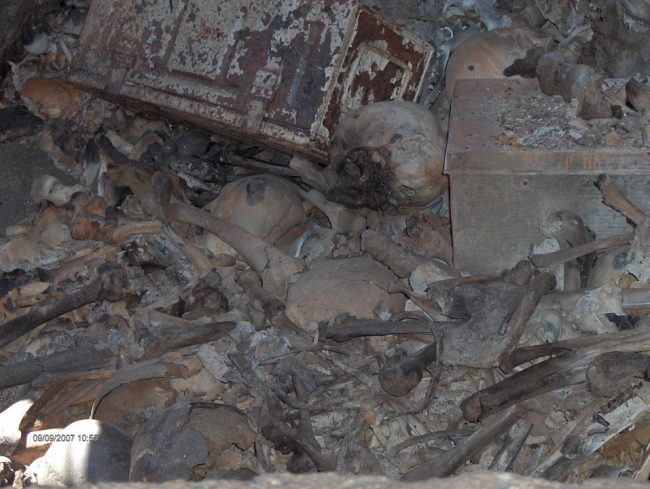
Whitehead’s new book starts with a team of archaeologists uncovering a mass grave on the grounds of what used to be a boys’ correctional “school” in Florida, which was called “Nickel”, hence the title.
The story follows Elwood Curtis, who ended up at Nickel, like so many other black boys, by being in the wrong place at the wrong time. He was a smart high school kid in the 1960s who was living with his grandmother after his parents abandoned him. He was working a job at a local convenience store, saving up for college, and trying to take some college courses before he graduated high school. Another black man was giving Elwood a ride to his first college class, but the car he was driving was stolen, so they were pulled over, he was arrested and Elwood was arrested and sent to Nickel just for being in the car with him, even though he had no idea the car was stolen.
At first, Nickel doesn’t seem so bad, but since the book opens with a mass grave being discovered on the site, we know things aren’t as they seem. Elwood tries to settle in and figure out the rules. Nickel is called a “reform school”, but there’s no real reform and only the barest hint of schooling. Elwood is placed in a class that teaches rudimentary math and English – things he learned years ago. When he asks for more challenging work, the teacher says he’ll find something for him, but it quickly becomes obvious that the teacher has no intention of challenging any of his students, and that none of the teachers at the school care if students attend class or not. As a fellow “classmate” informs Elwood early on, going to class has nothing to do with “graduating” from Nickel. You get points based on good behavior, and if that doesn’t get you out before you turn 18, they just let you loose when you turn 18 regardless of whether you completed your classes.
Elwood’s grandmother is the only family he has to speak of, but even that makes him luckier than most of the other boys at Nickel, who either don’t have any family, or whose parents are so abusive that Nickel seems like a vacation. There are also many boys who have been at Nickel multiple times. There are both white and black boys at Nickel, but they’re segregated, and while the black boys have it harder, it’s no picnic for the white boys either.
After Elwood has been at the school for a few days, a fight breaks out, he tries to stop it, and he gets punished along with the other two boys, even though he had been trying to break up the fight. Punishment involves getting taken from your bed in the middle of the night and taken to “The White House”, where you’re beaten with a leather strap called “Black Beauty.” Elwood is the last of the three to get whipped and he counts the lashes of the other two to estimate how long his torture will last, but one gets 70 lashes and the other only gets 20 or 30 and there appears to be no rhyme or reason as to who gets how many lashes.
Behind “The White House” are iron rings attached to trees and the boys who get taken out there never come back. The other boys are told they ran away, but no search party is ever organized to try to find them.
When he’s recuperating from his whipping in the school nursery, Elwood meets and befriends Turner, who says he drank soap to make himself throw up so he would get a day off. When the boys aren’t in school, they’re made to work various jobs, and those enterprises bring in healthy profits for the school, but of course the boys don’t get to reap any of the benefits from those profits.
Being a writer, Elwood records everything they do, including the dates and times. When there’s a “surprise” inspection of the place, it’s not really a surprise because someone at the school has a connection to someone in the Department of Justice, so they get a heads up and they make the school look much nicer than it is and order the boys to be on their best behavior and not make any trouble.
Elwood has a plan to get his records to one of the agents of the Department of Justice, but he misses his opportunity. Turner volunteers to deliver it for him, and he does, but Elwood is found out and taken to “The White House” in the middle of the night and then thrown in solitary confinement. When he’s released, Turner says they’re going to take Elwood “out back” and they both know what that means. Elwood isn’t surprised, but Turner has a plan for them to escape, but they have to leave right away.
I won’t tell you how it ends, but I will mention that, although Nickel is a fictional school and Elwood and his “classmates” are all fictional, the school is based on a real “reform school” called the Dozier School for Boys, which opened in 1900 and was finally closed in 2011 after investigations were launched by both the Florida Department of Law Enforcement and the U.S. Department of Justice. Allegations of abuse, neglect, rape, torture, and murder had been made against the school for decades, but it was only a few years ago that anyone decided to take them seriously and I’m so glad Whitehead decided to write a book about it, because otherwise I never would have known.
What did you read/listen to this week? Any other great books based on true events?