
Photo credit: Internet Archive Book Images via Foter.com / No known copyright restrictions
I had heard awesome things about this book by Colson Whitehead from people in my book group, as well as the greats like Oprah. It was on my TBR list, but when it won the Pulitzer and then went on sale at one of my local bookstores, I immediately bought it and bumped it up my TBR list. I then nominated it to my book club, which voted on it, which meant I had to read it.
I liked it, but I didn’t love it. I was glad I had heard from others that it was magical realism, rather than historical fiction, because otherwise I would have been expecting historical fiction. In that respect, I think the marketing of this book left a little something to be desired.
The book is about Cora, a slave in Georgia who is abandoned at 10 years old when her mother escapes to freedom. As if being a slave isn’t hard enough, Cora is on her own among the slaves without a parent or any siblings. A few years later, Ceasar, a slave from Virginia, talks Cora into escaping with him. He’s gotten word that there’s a stop on the underground railroad nearby and he thinks they can make it, despite the fact Georgia was supposedly too far south for any underground railroad stops.
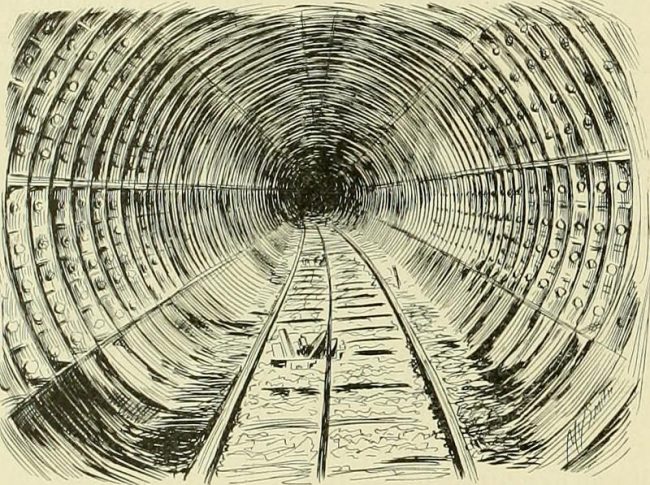
In reality there were no underground railroad stops that far south, but like I said, this book isn’t concerned with facts. So they make it to the stop and it turns out it is a literal underground railroad, but when a train comes, there’s no way of knowing which way it’s going. Even the conductor doesn’t know what the next stop will be. For all they know, they may be heading back south. But they don’t have much in the way of options, so they decide to hop on the next train, which ends up taking them to South Carolina.
South Carolina hasn’t abolished slavery, but the state government has purchased all the slaves and is letting them live and study and work as citizens. Cora gets a job working for a white family for a while, but then she gets transferred to working in a local museum as part of an exhibit on what white people think the history of African Americans is like. Ceasar works in a factory, and while they occasionally talk of moving farther north, they’ve become pretty complacent where they are until they get word a bounty hunter is on to them.
They get separated and Cora hops a train on the underground railroad and makes it to North Carolina, where the bounty hunter, Ridgeway, eventually finds her and takes her through Tennessee on his way to drop off other slaves before heading to Georgia, but on the way he gets attacked by a group of free black men who free Cora. They offer to let her join them, which she accepts, and then they all head up to Indiana together.
Now, not only are they in a free state, but they make their way to a farm owned by a black man who’s skin is so light most people assume he’s white and he doesn’t bother to correct them. He’s created a refuge for black people, but that makes the white people surrounding them nervous.
Not everyone in my book club enjoyed this book as much as I did, but it certainly made for some great discussion. Someone mentioned Whitehead had said in an interview that each state was meant to be a different aspect of racism and oppression. It certainly makes sense, and now that I know that, I kind of want to reread the book with that in mind.
South Carolina was the “friendly racist” that gave black people a taste of freedom, but did not adequately represent them in history and was busy sterilizing people from “violent” African tribes to try to avoid more slave riots. North Carolina just wanted to rid itself of all black people. I’m not sure what the wasteland of Tennessee was supposed to represent, but Indiana was the “promised land” that turned out to be less than what was promised. There’s no slavery, but white people still don’t like black people, they’re not comfortable with the idea of a lot of black people on one farm on the state, and even that sanctuary for former slaves and refugees turns out to be less than safe.
Cora makes it out of there and the end of the book has her heading west with another group of plucky strangers, starting over yet again. Whether things will be any better wherever she ends up is anybody’s guess.
One of the final chapters reveals that Cora’s mother, Mabel, made it a few miles off the plantation, but then she realized she couldn’t leave her daughter behind so she headed back, promising herself they would run away together when Cora was old enough. On her way back to the plantation, in the dark swamp, Mabel is bit by a poisonous snake and dies.
I’m not sure how I feel about that. Throughout the book, Cora resents her mother for leaving her, but at the same time, Mabel represents hope because she made it off the plantation and was never brought back, so everyone assumes she’s living free somewhere up north.
For Ridgeway, she represents the one who got away. He was hired to bring Mabel back to her owners, but he failed and that failure has always been a thorn in his side, so when her daughter runs away, the assignment is personal to him. At my book club meeting, we talked about how Ridgeway represented “the system,” so I guess Mabel represented escape from the system. The fact that her escape was, in fact, death I think is supposed to mean death is the only escape from the system.
I did appreciate that Ridgeway never referred to a slave as “he” or “she” – always “it.” The only time that changed was when the gang of free blacks held him at gunpoint and he was trying to talk his way out of that mess.
It’s not a hopeful book, but it is a good book that raises a lot of interesting questions, not only about slavery, but racism and oppression and carrying on in the face of it all. It’s a great book club book because it generates a lot of interesting discussion, and I’d say it’s definitely worth reading more than once.
What did you guys read this week? Any other prize winners?