
I decided to read this book by Madeline Miller, partly because everyone kept raving about Circe and I wanted to read this one before reading Circe (even though I know it’s not exactly a series and I could have skipped this one). I had also heard good things about The Song of Achilles, including from my mom, who listened to the audiobook, so I decided to listen to the audiobook, too. My library had a pretty long waiting list for this one, so I had no idea I would end up listening to this book while my mom was dying of cancer.
For those of you who don’t know, Achilles died in the war against Troy. Even if you hadn’t read The Iliad or seen any of the movies, that’s still not a spoiler because, fairly early on in the book, it’s revealed that there’s a prophecy that Achilles won’t survive the war if he goes to fight, but if he does go to fight, he’s promised all sorts of glory, and that’s really all any man in ancient Greece could ask for.
SPOILER ALERT!
OK, now I am going to spoil something for you, so if you don’t want it spoiled, I suggest you stop reading this now and either go read The Iliad, The Song of Achilles or watch one of the movies. Patroclus is the narrator of this story, which is an interesting choice because Patroclus himself dies before Achilles does, so I couldn’t help but wonder how (or if) Miller was going to tell the story of Achilles’ death after her narrator had already died, but I’ll get back to that.
This book starts with Patroclus telling us his earliest memories of his childhood and his parents. He was an only child, but not the strong, athletic son is father wanted, so he was a disappointment to his father and constantly picked on by other boys his age because of his weakness. When one boy goes too far, Patroclus accidentally kills him in self defense. The boy’s father demands justice, which according to the laws of the time, mean Patroclus is banned and he ends up being sent to work as a servant in another king’s palace, but he also gets an education and training to be a soldier, so it’s not all bad. That’s where he meets Achilles, the son of the resident king, and the two promptly become best friends and eventually lovers. I was kind of annoyed by the portrayal of Achilles as this perfect human being, but since he’s half god, I guess it makes sense, but it didn’t make it any more bearable for me.
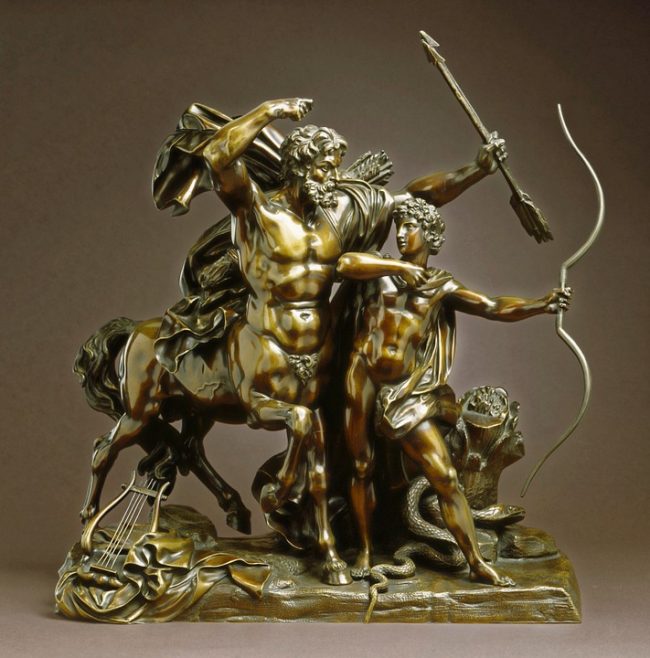
So they grow up together and spend a couple years with Chiron, learning all about nature and herbs and healing and how to take care of themselves in the wild, but after a few years Achilles’ father comes to collect them, asking Achilles to fight in a great war against Troy. After Achilles’ mother spirits him away to another kingdom in the middle of the night (she doesn’t want him to fight and die), Patroclus sets out to find him, but shortly after he succeeds, Odysseus and some of his friends show up and Odysseus uses his famous wit to force Achilles to reveal himself. Odysseus is portrayed in this book pretty much exactly the way you would expect him to be, and while he’s not exactly a good guy, he is fun to read about. So they take Achilles home and talk him into joining the fight, and because he and Patroclus are attached at the hip, Patroclus goes with him.
Patroclus joins the men in the first day of fighting, but Achilles manages to make sure no one gets near him and Patroclus gradually joins the fighting less and less frequently until he just stops going altogether and stays in the camp with the women and children. He does turn out to be a pretty good surgeon, though, so he makes himself useful among the wounded soldiers while Achilles is out fighting.
If I had known I would end up reading a book about two people who die young, who know their days are numbered, while also counting the last of my mom’s days in this life, I wouldn’t have done it that way, but having done it, I can honestly say it wasn’t nearly as bad as I would have expected. On the contrary, it was kind of cathartic to listen to these characters go through the same thing I was going through as I was going through it.
So, back to the ending, Miller ended up having Patroclus continue to narrate the rest of the story after his death. He was able to look on as a ghost as his body was brought before Achilles and Achilles went out for revenge before dying himself. I had a little bit of trouble with that part, since Miller describes Achilles’s feelings, which starts to get into Achilles as narrator. That had me confused for a bit, since I was still trying to figure out who was narrating after Patroclus died, but if Patroclus was still narrating from beyond the grave, he couldn’t have been able to describe Achilles’s internal feelings – how he expressed those feelings, sure, but not how they felt to him. So I think that could have been done a little better, but overall, I thought it worked.
Achilles had requested that his ashes be mixed with Patroclus’s ashes, but Achilles’s son refuses, saying it would debase his father to have his ashes mixed with those of a slave (since Patroclus was technically a slave, even if he wasn’t treated like one). That’s right, Achilles has a son who shows up out of nowhere at the eleventh hour and finally manages to breach the walls of Troy and help sack the city. But he’s an arrogant, brutal little prick and refuses to honor his father’s dying wish until, right before they sail home, he’s finally talked into it. Only then can the souls of Patroclus and Achilles be reunited, allowing them to finally move on to the afterlife.
This book is as good as everyone says it is and David Thorpe does an incredible job narrating it. He gives each character their own, distinct voice so you know immediately who’s talking without needing to be told. It was so good and I’m definitely going be reading Miller’s next book once I’m done using light, fluffy romance books as comfort reads.
What did you read/listen to this week? Anything that really hit home in ways you weren’t expecting?