
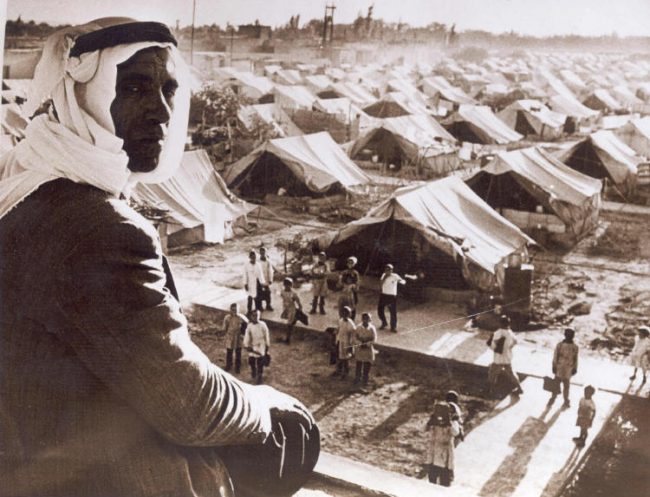
Photo credit: gnuckx via Foter.com / CC BY
I read this book by Sandy Tolan for my book club and I’m so glad I did because I never would have picked it up otherwise. Yay book clubs!
This is a non-fiction book about the dispute between Israel and Palestine and it made me feel like such a dumb American for not knowing anything about it. I knew the Europeans had randomly divided up the Middle East into different countries without bothering to consider what the inhabitants of those new countries wanted, but I didn’t know anything about Jews moving to the area en masse after WWII.
I also had not known that Bulgarians stood up for their Jewish citizens and saved thousands from being shipped off to concentration camps (including the parents of one of the people this book focuses on). It was a beautiful and inspiring story, but at the same time it was also discouraging. I can’t help but wonder why no one else in Europe did what the Bulgarians did?
The story focuses on a man named Bashir and a woman named Dalia. Bashir is the eldest son of a furniture maker in al-Ramla, a city in Palestine. His extended family was very wealthy and influential, but not influential enough to prevent them from becoming refugees. When Jews started coming in droves after WWII, it caused the usual economic problems (job shortages, driving down wages, etc.)
But it wasn’t until the Jews became armed and forcibly drove out the Arabs, including 6-year-old Bashir and his entire family, that things really went to hell. It’s heartbreaking because Bashir’s father literally built their house with his own two hands and planted the lemon tree in the back yard from which the book takes its title. He built it with raising his family in mind, but while he and his wife were still trying to raise their kids, they were forced out. They were all loaded onto a bus and dumped in the middle of the desert. They were told they could walk to the nearest town, which was supposedly just a few kilometers away, but ended up being much father. No one knows exactly how far it was, but they are sure they had to walk in 100º+ heat and not everyone made it.
After that, they were refugees. Many of them had to try to make new lives for themselves in new cities, but they had nothing except what they could carry with them. Their houses and lands were all claimed by the state of Israel and given to Jewish families who continued to migrate to their promised land.
The Jews who moved in were told their new houses were simply abandoned by the Arab families that used to live there – that they were cowards who dropped everything and left food cooking in pots on the stoves as they fled from the Israelis without even bothering to put up a fight. Dalia was just a baby when she and her parents moved in to the house that Bashir and his family had “abandoned.” They were excited at the prospect of this new land just for Jews, having been told before they came that it was a land without people for a people without land.
A few years later, the Arabs fought back in an attempt to reclaim their land, but they were outgunned and outfinanced. Western countries (including the U.S.) gave money and weapons to the Israelis, which left the Arabs no hope whatsoever against the Israelis’ much larger and more sophisticated weaponry. The irony is that, while she was growing up, Dalia (and much of the world) was told the Israelis against the Arabs was like David facing Goliath, when the truth was just the opposite.
Arabs were largely banned from re-entering al-Ramla, but Bashir and a couple of his friends snuck in about 19 years after they were kicked out, just to see their houses one more time. One of his friends was yelled at to leave before the new inhabitants called the authorities and the other’s house had been turned into a school, but Bashir’s birthplace was very much the way they had left it and the current inhabitant, Dalia (her parents weren’t home at the time), let them in to look around. They did, taking in all the changes, and as they do, Dalia looks at her home and her furniture for the first time through Bashir’s eyes.
Against all odds, Dalia and Bashir form a friendship. Bashir is deeply committed to the Arab cause and what they call the “right of return,” which refers to their right to go back to their homes. Dalia is just as committed to the Israeli cause. As she sees it, the Jews were banished from their homes two thousand years ago and now they’re merely taking back what was promised them. But because she and her parents grew up with the idea of being homeless people who were kicked out of their homes, Dalia very much feels for Bashir and his family who are currently living that reality.
The friendship between these two people spans decades, up to (and, I hope, after) the publication of the book. I loved that the book was able to portray the two opposing viewpoints through the eyes of these two individuals and illustrate their common ground, as well as the issues they could never agree on. It covers decades and the many failed attempts between Israel and Palestine to negotiate a treaty, as well as Bashir’s multiple arrests and many years of imprisonment.
Bashir denies all charges, says he doesn’t recognize the Israeli court, and that his trials were all shams, but the writing of the book takes a very neutral viewpoint. Tolan does an excellent job of neither confirming nor denying whether Bashir took part in any of the terrorist activities he was accused of orchestrating. He mentions Bashir’s denial, but does not present any evidence either way, except that Bashir is not opposed to terrorist tactics on principle.
It’s a beautifully-written book and the woman who nominated it for our book club said she’s read it twice and recommends it to everyone. I have a hard time disagreeing.
What did you guys read this week? Anything else that opened up your minds and educated you on a totally unfamiliar issue?