
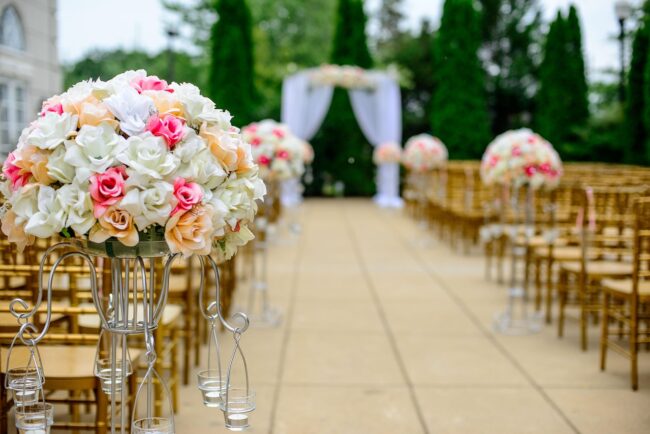
Isn’t the whole point of renting out an entire hotel for your wedding so a random stranger can’t ruin your wedding by committing suicide in the hotel during your special week?
Phoebe Stone has decided to kill herself.
But first, she’s treating herself to stay at a fancy hotel — the Cornwall Inn, to be specific — in Newport, Rhode Island. She’ll wear the gorgeous dress she bought a few years ago and has yet to wear, treat herself to a nice dinner, then take the remainder of her cat’s pain meds, go to sleep, and never wake up.
The cat is already dead, so he doesn’t need the meds anymore. And, in the morning, her body will be the problem of the hotel staff.
It’s not a great plan, and sure enough, it doesn’t work out the way she thought it would.
It turns out the hotel has been booked up by a wedding party. They weren’t even supposed to let Phoebe have a room for the night, but there was an admin error, so here she is! Getting ready to end her life while all these disparate people are coming together, ostensibly to celebrate two people starting a life together.
Because the hotel was supposed to have been booked up for the wedding, and weddings inherently involve people from two different worlds coming together, everyone assumes Phoebe is there for the wedding.
Phoebe doesn’t know any of these people, and the beautiful thing about being surrounded by strangers and all out of fucks to give is she has no reason to lie. So, when the bride, Lila, runs into Phoebe and finds out Phoebe is not, in fact, there for the wedding, Phoebe has no compunction about telling her the truth: that she’s there to kill herself.
Lila has no qualms about telling her she’s not allowed to “ruin her wedding” by killing herself at her hotel during her special week (yes, it’s a whole week.)
Phoebe knows her suicide wouldn’t ruin anyone’s day. It might make the bride feel sad for a bit, but then she’ll go for a walk on the beach, kiss her new husband, and move on with her life.
Nevertheless, Lila shows up at her room anyway and they end up hanging out and chatting for several minutes.
After Lila leaves, Phoebe carries out her plan, only to stick her finger down her throat and barf up the pills.
Lila comes to check on her in the morning, and instead of saying something empathetic, like, “I’m so glad you’re OK,” she basically says, “I told you so,” and then decides Phoebe will be included in her wedding.
She doesn’t invite Phoebe so much as inform Phoebe that she is now to be included.
I understand the wedding is supposed to be all about the bride, but Lila likes to take it to an extreme. She’s the kind of spoiled rich girl you can tell is used to getting her way, with or without a wedding as an excuse.
Not only does Phoebe get invited to the wedding, but when Lila’s maid of honor can’t make it, Phoebe suddenly becomes the maid of honor, despite having just met the bride and the other bridesmaids.
Because Phoebe doesn’t know these people, not only does she tell them things she wouldn’t normally tell someone (like her suicidal tendencies,) but they end up telling her things they wouldn’t normally tell her.
She gets to hear a less-than-flattering take on Lila’s mom, then gets to hear Lila’s mom’s side of the story, which of course, not only paints her in a better light, but provides context for the stories Lila tells of her.
She gets to see Lila at her worst, and Lila, if not at her best, certainly at her more approachable and less bridezilla moments.
I loved the nuanced view this book took of all these different people, and I also loved getting to read a book that talks so blatantly about suicide and the deep, dark depression that leads to someone not wanting to live anymore.
So often, our tendency is to shy away from that darkness, but this book looks at it straight on, and I really appreciated that.
At the same time, this book was able to turn on a dime and go from depression to bridezilla in a heartbeat, so don’t worry that this is the type of book that wallows in depression, because it’s not. It addresses depression, suicide, and the things that can go wrong in someone’s life to drive them to that level of depression and suicide, but it also celebrates the things that make life worth living. It’s just that sometimes you need to get out of your rut to remind yourself of all the beautiful things in life.
My one quibble with this book was the ex-husband who left her for her best friend two years ago reappearing out of the blue and saying he made a mistake and wants her back.
No, Phoebe doesn’t take him back, and while I understand the emotional satisfaction of hearing that from the guy who caused (or at least very much contributed to) this depression in the first place, I didn’t find it believable.
I also don’t think it should be necessary. Phoebe has already realized she wasn’t really happy with her husband at the end of their marriage, and she doesn’t want him back. Now she has a new friend, a new job, and maybe even a new romance in her future. Why can’t it be enough for her to ride off into that sunset and leave her emotionally stunted ex behind?