
Photo credit: Pesky Library via Foter.com / CC BY-NC-ND
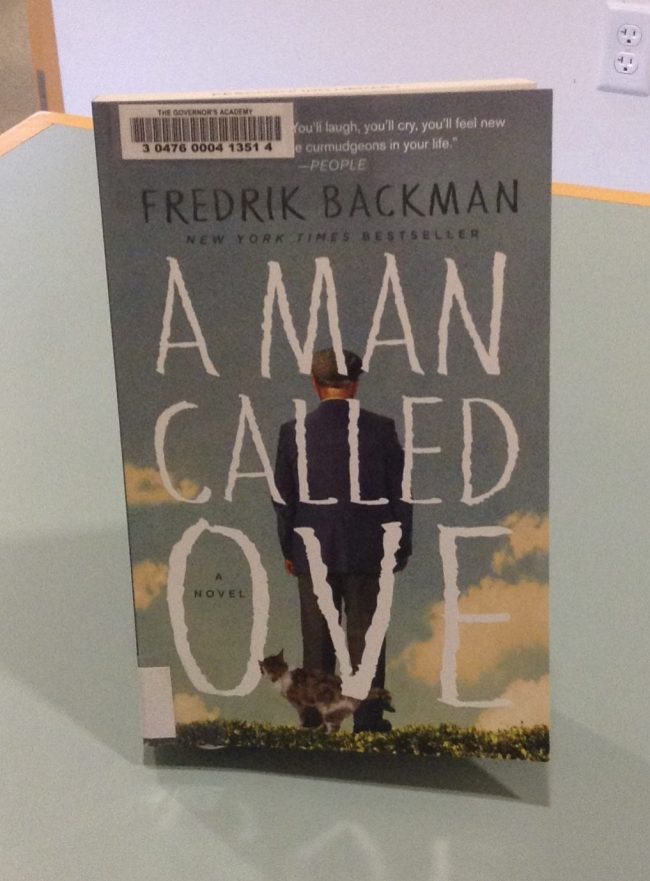
I had already been planning on reading this treasure by Fredrik Backman, so when someone nominated it for my book club, I voted on it and was super excited when it got enough votes for us to read and discuss it together!
Ove is a grumpy, fifty-nine-year-old man who has just been let go into “early retirement” from his job of more than thirty years, six months after his wife died of cancer. It took me a couple chapters to realize his wife (Sonja) was dead because she was always referred to in the present tense. In the manner typical of anyone who has lived with the same person for decades, Ove continues talking to/arguing with his wife even after she’s gone.
Ove loved both his wife and his job dearly, and without either, he doesn’t see any point in sticking around and taking up space. So he has resolved to kill himself, but it turns out he’s not very good at dying. He tries three different methods and keeps getting foiled by various accidents.
Ove’s neighbors slowly manage to draw him out and bring him back into the circle of their little residential society, much to Ove’s disgruntlement. It starts with a pregnant woman (Parvaneh) moving in to the house next to Ove with her husband and two children. Then Jimmy, a relentlessly cheerful, chubby gay man who lives on Ove’s other side, gets involved, and once Parvaneh’s children get on board, Ove has no hope. My only complaint was that the seven year old sounded more like a teenager than a seven year old.
Ove is a grouchy old man, but I was surprised by Backman’s ability to make me care so much about such an unpleasant character. I think that skill was mostly due to Backman revealing Ove’s background and his motivations.
Ove’s not a bad guy, but like most men his age, he feels left behind by the world quickly building up around him. The little row house he and his wife bought together has become the center of a development and now there are people moving in with computers and Audis and expensive suits and drinking espresso instead of coffee and generally being useless.
Of course Ove’s neighbors aren’t useless, but Ove came from a time and place in which certain things were done a certain way. He believes there’s a right way and a wrong way to do everything and he’s unable to keep up with the way society is changing how things work.
Above all, Ove values loyalty and honesty. The book circles around a fight he had with his best friend, Rune, that occurred after Rune bought a BMW and Ove insisted that “you just can’t reason with a person like that.” For Ove, it wasn’t about the car as much as it was about loyalty. All his life, Rune had driven Volvos. For him to suddenly “switch teams,” so to speak, to Ove, was a betrayal. Ove’s reactions may be extreme, but they are understandable.
I saw a review of this book by one of my friends that called Ove a racist/bigot, but I didn’t see any evidence of that in the book, other than a derogatory comment about foreigners moving in. I can see how that would be interpreted as racist, although I just saw it as another way the world is changing too much too quickly for men like Ove. But I didn’t think he was a racist or a sexist, either in the way he treated his wife or the other women around him, including Parvaneh, who just happens to be an immigrant. At one point Ove explicitly compliments her on the trials she faced in moving to a new country.
Ove even harbors a gay boy at one point, helps reunite him with his father (another old man who’s a product of his time and finding it difficult to keep up with the changing times), and serves as best man at his wedding.
In the end Ove, can’t kill himself because he’s needed. Apparently no one knows how to fix their own stuff these days, so they always need Ove to come tinker with such-and-such.
At my book group meeting we discussed how this book might have been different if Ove had been a woman instead of a man. Would she have been as needed? Would she have ever gotten that withdrawn in the first place? And what sorts of things would her neighbors come to her for? For example, no one seems to come to Ove for emotional support (except maybe Mirsad when he moves in with Ove). Instead they need him to fulfill the traditionally masculine role of being handy around the house … and the neighborhood, apparently.
One of my fellow book club members said she finished the book only to realize she was crying and laughing and hugging the book to her chest. I think that just about says it all.
What did you guys read this week? Any other sickly-sweet stories?
One comment
Comments are closed.